









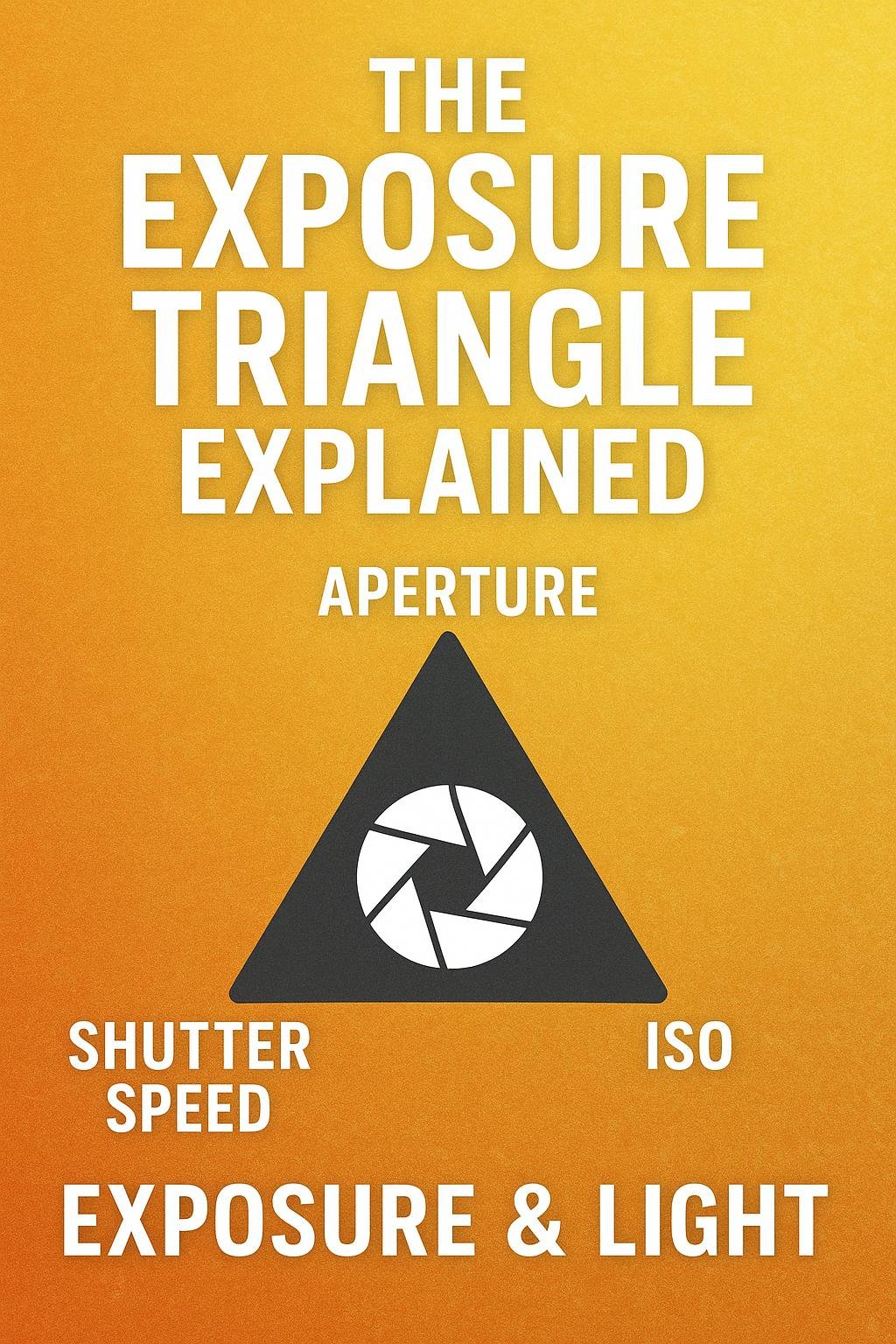
The Exposure Triangle Explained
Aperture: Controlling Light and Depth
The aperture is the opening in a lens that controls how much light enters the camera. It is measured in f-stops, with lower numbers meaning a wider opening. A wider aperture lets in more light, which is useful in low-light conditions. It also affects the depth of field, making the background blurrier or sharper depending on the setting. Understanding aperture is essential for creative control over your photos.
Shutter Speed: Capturing Movement
Shutter speed is the amount of time the camera’s sensor is exposed to light. Faster shutter speeds freeze motion, while slower speeds can create motion blur. This setting is vital when photographing fast-moving subjects or when you want artistic effects. Adjusting shutter speed balances the exposure by controlling how much light hits the sensor over time. Mastering this helps you capture both sharp and dynamic images.
ISO: Sensitivity to Light
The ISO setting adjusts the camera sensor’s sensitivity to light. Higher ISO values make the sensor more sensitive, allowing better performance in darker environments. However, increasing ISO can also introduce noise, which reduces image quality. Balancing ISO with aperture and shutter speed keeps your photos properly exposed and clear. Learning how ISO works completes your understanding of the exposure triangle.








![{"result":"The Exposure Triangle ExplainednnAperture: Controlling Light and DepthnThe aperture is the opening in a lens that controls how much light enters the camera. It is measured in f-stops, with lower numbers meaning a wider opening. A wider aperture lets in more light, which is useful in low-light conditions. It also affects the depth of field, making the background blurrier or sharper depending on the setting. Understanding aperture is essential for creative control over your photos.nnShutter Speed: Capturing MovementnShutter speed is the amount of time the camera's sensor is exposed to light. Faster shutter speeds freeze motion, while slower speeds can create motion blur. This setting is vital when photographing fast-moving subjects or when you want artistic effects. Adjusting shutter speed balances the exposure by controlling how much light hits the sensor over time. Mastering this helps you capture both sharp and dynamic images.nnISO: Sensitivity to LightnThe ISO setting adjusts the camera sensor's sensitivity to light. Higher ISO values make the sensor more sensitive, allowing better performance in darker environments. However, increasing ISO can also introduce noise, which reduces image quality. Balancing ISO with aperture and shutter speed keeps your photos properly exposed and clear. Learning how ISO works completes your understanding of the exposure triangle.","id":"chatcmpl-D33BjlGhkBDPvFuztrc8A3QT02kRP","object":"chat.completion","created":"2026-01-28T17:00:11.000Z","model":"gpt-4.1-mini-2025-04-14","choices":[{"index":0,"message":{"role":"assistant","content":"The Exposure Triangle ExplainednnAperture: Controlling Light and DepthnThe aperture is the opening in a lens that controls how much light enters the camera. It is measured in f-stops, with lower numbers meaning a wider opening. A wider aperture lets in more light, which is useful in low-light conditions. It also affects the depth of field, making the background blurrier or sharper depending on the setting. Understanding aperture is essential for creative control over your photos.nnShutter Speed: Capturing MovementnShutter speed is the amount of time the camera's sensor is exposed to light. Faster shutter speeds freeze motion, while slower speeds can create motion blur. This setting is vital when photographing fast-moving subjects or when you want artistic effects. Adjusting shutter speed balances the exposure by controlling how much light hits the sensor over time. Mastering this helps you capture both sharp and dynamic images.nnISO: Sensitivity to LightnThe ISO setting adjusts the camera sensor's sensitivity to light. Higher ISO values make the sensor more sensitive, allowing better performance in darker environments. However, increasing ISO can also introduce noise, which reduces image quality. Balancing ISO with aperture and shutter speed keeps your photos properly exposed and clear. Learning how ISO works completes your understanding of the exposure triangle.","refusal":null,"annotations":[]},"logprobs":null,"finish_reason":"stop"}],"usage":{"prompt_tokens":206,"completion_tokens":325,"total_tokens":531,"prompt_tokens_details":{"cached_tokens":0,"audio_tokens":0},"completion_tokens_details":{"reasoning_tokens":0,"audio_tokens":0,"accepted_prediction_tokens":0,"rejected_prediction_tokens":0}},"service_tier":"default","system_fingerprint":"fp_376a7ccef1"} The Exposure Triangle Explained,Exposure & Light,General](https://photographers.com.tr/wp-content/uploads/2026/01/output1-640x960.jpeg)


