





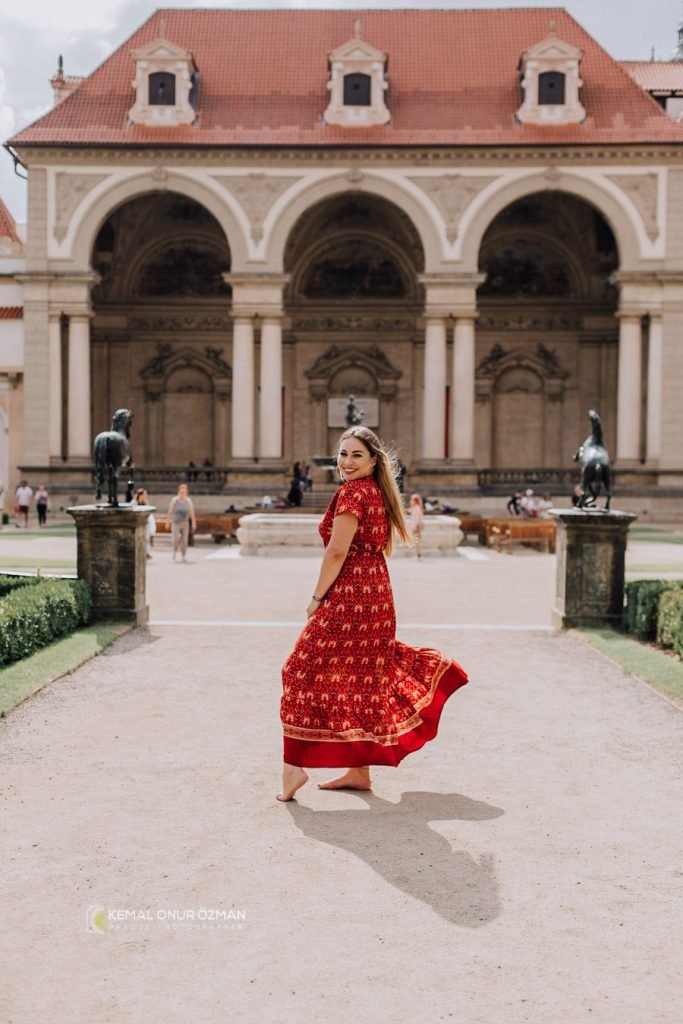
The Waldstein Garden (Valdštejnská zahrada, also written Wallenstein Garden) is a strictly geometrical early Baroque garden in Malá Strana, directly below Prague Castle. It belongs to the Waldstein Palace, which is today the seat of the Senate of the Czech Republic, and it is one of the most elegant green spaces in the city. For us it is also one of the most reliable portrait locations in Prague.
History
The garden was created in parallel with the construction of the Waldstein Palace in the 1620s. The man behind both was Albrecht of Wallenstein, the immensely rich and ambitious commander of the imperial armies in the Thirty Years’ War. He had more than twenty houses, several gardens and a brickworks demolished to make room for a residence that was meant to rival Prague Castle on the hill above it. Italian architects and artists gave the complex its Italian character.
Wallenstein did not enjoy his palace for long: he was assassinated in Cheb in 1634. At the end of the war, in 1648, Swedish troops carried off the bronze statues from the garden as war booty. The originals are still in Sweden, and the statues you see along the main path today are copies.
What to See
At first sight one’s eyes are drawn to the massive sala terrena, which was unprecedented at the time of its construction, and to the artificial cave wall with stalactites.


Sala Terrena
The dominant feature of the Waldstein Garden is the monumental Sala Terrena, a huge pavilion with three arches open to the garden. It was not originally just an open garden building, but a sort of continuation of the palace’s residential rooms, used mainly for admiring the garden. At the time it was built, no other palace in Prague had anything like it.
Its interior decoration is in keeping with the palace’s indoor rooms. There are 32 painted scenes in the Sala Terrena, mainly from ancient mythology and the Trojan War, the work of a follower of the Italian painter Baccio del Bianco. The ceiling is adorned with frescoes depicting Olympus, with Zeus, his wife Hera and the goddess Aphrodite in the middle (Jupiter, Juno and Venus in Roman mythology). The medallions around them show motifs from the Trojan War (source: Senat.cz).
The Statues and the Fountain
The avenue leading from the Sala Terrena is lined with bronze figures of gods and heroes after the originals by the sculptor Adriaen de Vries. In the centre stands a fountain with a statue of Venus.
The Dripstone Wall and the Aviary
One side of the garden is closed by a tall, strange wall of artificial stalactites, known as the Grotto. People like to search for faces and animals hidden in its shapes. Beside it is a large aviary, home to owls.
The Pond and the Peacocks
The eastern part of the garden has a large pond with an island and a statue of Hercules. Peacocks walk freely on the lawns, including white ones, and they are surprisingly patient models.
Waldstein Riding Hall
The Riding Hall is a spacious two-storey building that closes the whole Waldstein complex on its eastern side. It served its original purpose until the end of the 19th century. After the First World War the Waldsteins rented it to the Laurin & Klement car factory and later to other automotive firms. Car repair services remained there even after the Second World War, and in the 1950s there was talk of building garages in the cellar (source: Senat.cz). Today the hall is used for art exhibitions.
Opening and How to Get There
The garden is open to the public free of charge, but only in the warmer part of the year, roughly from April to October. In summer many locals come here for concerts and theatrical performances. Exact dates and hours vary, so check the Senate’s official website before you go.
The easiest entrance is right beside Malostranská metro station (line A), which is also a tram stop. There is another gate on Letenská Street, and you can also enter through the palace courtyard from Valdštejnské náměstí.
Photographing the Waldstein Garden
Light and Time of Day
Come when the gates open. In the morning the garden is quiet, the light is soft, and you can photograph the Sala Terrena and the statue avenue without people. By late morning the tour groups arrive. Late afternoon is the second good window, with warm side light on the palace and long shadows from the clipped hedges.
Viewpoints and Ideas
- The statue avenue – stand at the fountain and shoot along the line of bronzes towards the Sala Terrena. Symmetry is the whole point of this garden, so take care to stay exactly on the axis.
- The view up to the castle – from the lawns near the pond you can frame the towers of St Vitus Cathedral above the garden walls and the palace roofs.
- Inside the Sala Terrena – use the arches as a frame and expose for the garden outside. Look up for the ceiling frescoes.
- The dripstone wall – a dark, textured background that works very well for dramatic portraits.
- Reflections – on a calm day the pond mirrors the Riding Hall and the Hercules statue.
- The peacocks – a short telephoto and some patience. Do not chase or feed them.
Seasons and Crowds
May and June are the best months, with fresh hedges and flowering beds. On summer afternoons the garden is hot and busy. Since the garden is closed in winter, do not plan it for a December visit.
Waldstein Garden Photoshoots
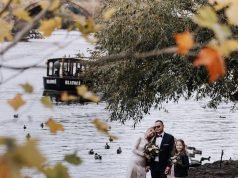
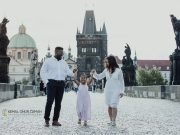
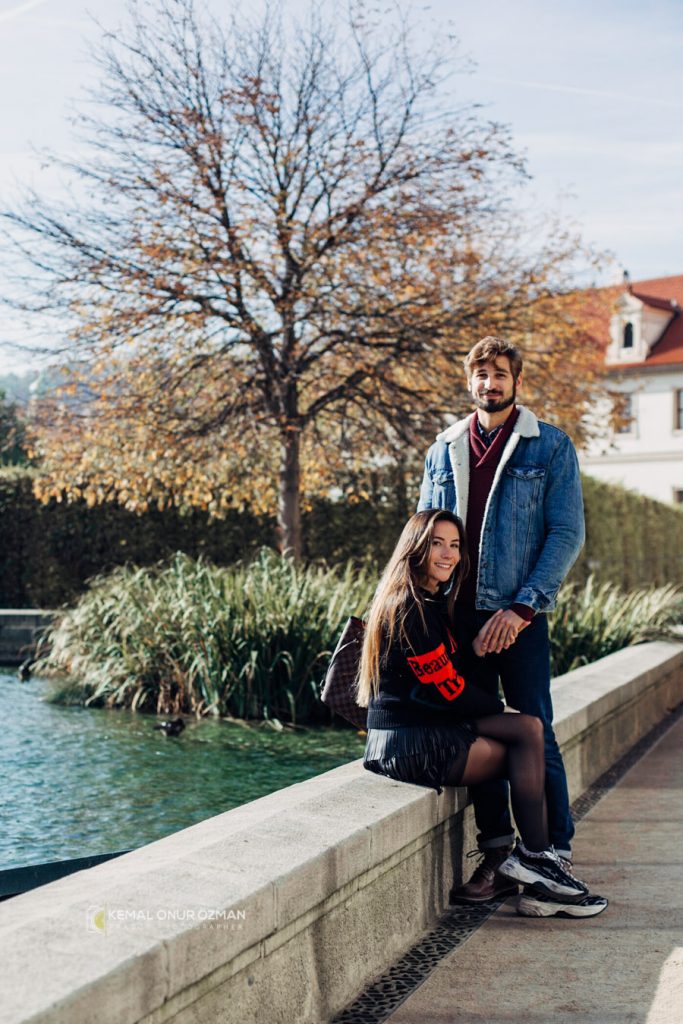
The Baroque garden is one of our regular photoshoot destinations in Prague, for solo travellers as well as couples and families. The clipped hedges, arches and statues give clean, classic backgrounds within a few steps of each other. Remember that the palace is the seat of the Senate: be considerate, keep equipment minimal and follow the instructions of the staff.


Planning more stops in the city? Browse more Prague guides for other places worth visiting and photographing.