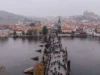







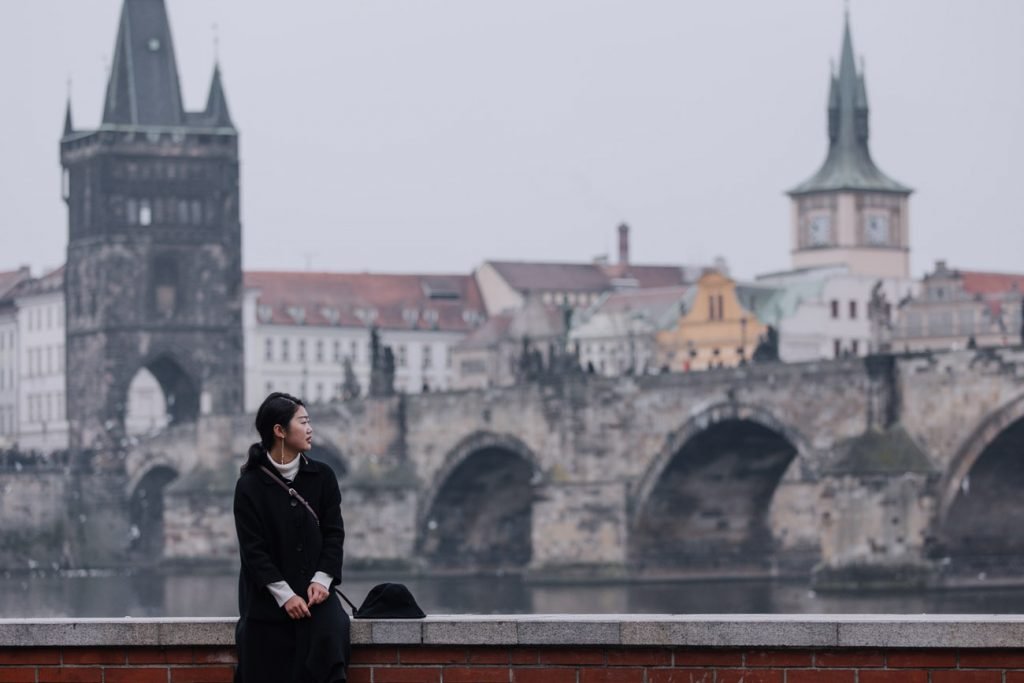
Charles Bridge (Karlův most) is the oldest bridge in Prague and the most famous one in the Czech Republic. It is reserved for pedestrians and connects Staré Město (the Old Town) with Malá Strana (the Lesser Quarter) and the castle area. From the bridge you can see a whole series of other bridges up and down the Vltava, as well as Shooter’s Island (Střelecký ostrov) and Slav Island (Žofín).
On the Prague Castle side, under the bridge, lies Kampa Island. For most of the day, and especially in summer, painters, musicians and arts and crafts vendors show their work along the bridge.
Charles Bridge Photos


Construction and History
Construction started in 1357 under Charles IV, King of Bohemia and Holy Roman Emperor, and was completed in the early 15th century under his son Wenceslas IV. The work was led by Peter Parler, the same architect who built much of St Vitus Cathedral. The new bridge replaced the older Judith Bridge, which had been destroyed by a flood in 1342.
According to a popular story, the foundation stone was laid on 9 July 1357 at 5:31 in the morning, a moment chosen by the court astrologers because the date and time form a sequence of odd numbers that reads the same in both directions: 1-3-5-7-9-7-5-3-1.
The bridge is built of sandstone blocks. It has 16 arches, is a little over 500 metres long and about 10 metres wide. For centuries it was simply called the Stone Bridge or the Prague Bridge; the name Charles Bridge came into use only in 1870. Until 1841 it was the only bridge across the Vltava in Prague, and coronation processions of the Bohemian kings crossed it on their way to the castle. It has survived many floods, wars and, in the 20th century, trams and cars. It has been closed to traffic since the 1960s.
What to See on the Bridge
The Statues
Thirty statues and groups of statues line the balustrades. Most of them were added in the Baroque period, around the turn of the 18th century, by sculptors such as Matthias Braun and Ferdinand Maximilian Brokoff. Many of the figures on the bridge today are copies; the weathered originals have been moved indoors.
The oldest and best known is the bronze statue of St John of Nepomuk from 1683. According to legend he was thrown from the bridge into the river in 1393 on the orders of Wenceslas IV. Touching the relief on the base of the statue is supposed to bring good luck and make sure you return to Prague – you will easily find it, because it has been polished to a shine by millions of hands.
The Bridge Towers
The Old Town Bridge Tower, also by Peter Parler’s workshop, is considered one of the most beautiful Gothic gateways in Europe. At the other end, two Lesser Town Bridge Towers of different heights are joined by a gate. Both ends have a tower that can be climbed for a view along the bridge; check the official website for current opening times and admission.
How to Get There
- Location: Prague 1, between the Old Town and Malá Strana.
- Metro: Staroměstská on the Old Town side or Malostranská on the castle side (both line A), each about five to ten minutes on foot.
- Tram: Staroměstská or Karlovy lázně on the Old Town side, Malostranské náměstí on the Malá Strana side.
Charles Bridge on the Map

Photographing Charles Bridge
Best Time of Day
Sunrise, without any doubt. For most of the day the bridge is so crowded that you can hardly see the paving, but at dawn you share it with a handful of photographers, runners and sometimes a wedding couple. The sun comes up behind the Old Town, so if you stand on the bridge looking west, the first light falls on the statues, the Lesser Town towers and Prague Castle. Looking east, you get the silhouettes of the statues and the Old Town Bridge Tower against the morning sky.
The second good moment is the blue hour, before sunrise or after sunset, when the lamps along the bridge are lit and the castle is floodlit. A tripod is manageable before dawn; in the evening the crowds make it difficult.
Viewpoints
- On the bridge itself: use the statues as dark foreground shapes with the castle behind them. A short telephoto compresses the row of statues and lamps nicely.
- Old Town Bridge Tower: the view from the top looks straight along the bridge towards the castle – the best elevated view of it.
- Lesser Town Bridge Tower: the reverse view, over the bridge to the domes and spires of the Old Town.
- The embankment by the Old Town end (Smetanovo nábřeží and the area around the Smetana Museum): the classic postcard view of the bridge with the castle above it.
- Kampa Island riverbank: a low, close view of the arches from the Malá Strana side, with swans in the foreground.
- Mánes Bridge: the next bridge downstream gives a full side view of Charles Bridge, good at sunrise and sunset.
- Letná Park: from the hill you can photograph the whole sequence of Vltava bridges with a telephoto lens.
Seasons and Weather
Winter is my favourite season here. Mornings start later, so the sunrise is easier to reach, the crowds are thinner, and on cold days mist rises from the river and softens the towers. Fresh snow on the statues is rare but unforgettable. In summer you need to be on the bridge very early – by the time most visitors have finished breakfast, the quiet is over.
Rain is not a reason to stay away. Wet paving reflects the lamps, and umbrellas add colour to an otherwise grey scene.
Dealing with Crowds
If you cannot come early, work with the people instead of against them: photograph the musicians and painters (ask first and leave a coin), shoot upwards at the statues against the sky, or use a long exposure from the riverbank so that the crowd on the bridge blurs away. Keep an eye on your bag in the densest parts of the day.
Planning more stops in the city? Browse more Prague guides for other places worth visiting and photographing.