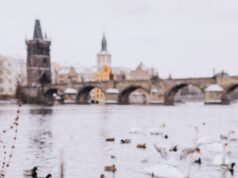
Eloping in Prague means getting married, or marking your commitment, as a small private event in the city rather than a full wedding with a large guest list. It can be just the two of you and a photographer, or a handful of close family and friends, followed by a walk through the old streets for portraits.
The most important decision comes first: do you want a legally binding civil marriage in the Czech Republic, or a symbolic ceremony in Prague with the legal part done at home? The answer shapes your paperwork, your timeline and where the ceremony can take place. This guide explains both routes in general terms and points you to the official sources for the details.
What an elopement in Prague looks like
An elopement here is less about running away and more about keeping the day small and personal. Typical elements are:
- A short ceremony, legal or symbolic, often with readings or vows you write yourselves.
- A few guests at most, sometimes none, with the photographer or an officiant acting as a witness where that is allowed.
- Portraits around Charles Bridge, Malá Strana, the castle area or a garden, timed for good light.
- A quiet dinner or a toast afterwards rather than a reception.
Because there is no large schedule to protect, you have freedom to choose the time of day, move with the weather and spend more of the day on photographs.
Symbolic ceremony or legal civil marriage
A symbolic ceremony
Many couples who elope to Prague marry legally at home, before or after the trip, and hold a symbolic ceremony in Prague. A symbolic ceremony has no legal effect, so there are no Czech marriage documents to prepare. You can choose who leads it, whether that is a friend, a celebrant or simply the two of you reading vows to each other, and it can take place wherever you are allowed to stand quietly, as long as you respect the venue’s rules.
This is the simplest route for most foreign couples and gives the most freedom over the location and timing.
A legal civil marriage in the Czech Republic
Foreigners can marry legally in the Czech Republic, but it takes paperwork and lead time. In Prague, marriages are handled by the registry offices of the city districts, and you apply to the office of the district where your chosen venue lies. In general terms, you can expect to need:
- Valid passports and birth certificates.
- Proof of citizenship and a document confirming that you are free and legally able to marry, which usually has to be recent.
- Apostilles or legalisation for foreign documents, and official translations into Czech.
- An official interpreter at the ceremony if either of you does not speak Czech.
Requirements differ by nationality and can change, and different offices give different deadlines for submitting documents. Start with the registry office for your chosen district and the Czech Ministry of the Interior, and check with your own country’s embassy about how the marriage will be recognised at home. Allow several months rather than several weeks.
A legal ceremony takes place in a registry office or at a location the office agrees to, with a registrar present, on dates the office sets. Some well-known venues coordinate directly with the local registry, so ask the venue how it works before you fall in love with a date.
Places for a small ceremony in Prague
Where you can hold the ceremony depends on whether it is legal or symbolic, on the season and on each venue’s own rules. These are the kinds of places couples usually consider.
Baroque gardens
Prague’s terraced and walled gardens give a sense of privacy in the middle of the city. Some, such as Vrtba Garden in Malá Strana, host weddings by arrangement, while others, such as Wallenstein Garden and the Prague Castle gardens, are public spaces open seasonally, roughly April to October. A public garden is usually fine for a quiet symbolic exchange of vows, but ask about any formal event, chairs, decorations or music.
Viewpoints over the city
Petřín hill, Letná and the area around Prague Castle give wide views of the river and bridges. They work well for vows at sunrise or just before sunset, when they are quieter. They are open public places, so expect passers-by and keep the ceremony simple.
Vyšehrad
The fortress at Vyšehrad is calmer than the castle side and has green lawns and views along the Vltava. Civil ceremonies there are arranged through the Prague 2 registry on limited days, so check availability early if you want it to be legal.
Historic halls and the riverside
Registry ceremony rooms in Prague’s historic town halls are formal and elegant, and the riverbank or a quiet street in Malá Strana makes an easy follow-on for portraits. Churches and memorials are places of worship and remembrance, so do not use them as backdrops for a ceremony without permission and keep photos respectful.
For more location ideas that also suit small, intimate moments, see our guide to where to propose in Prague.
How to plan a Prague elopement step by step
- 1. Decide legal or symbolic. This is the decision everything else rests on.
- 2. If legal, contact the registry early. Ask the district office for the venue about documents, deadlines, interpreters and available dates. Check recognition with your embassy.
- 3. Choose the season and time of day. Gardens are mostly open from spring to autumn. Sunrise gives quiet landmarks, late afternoon gives warm light.
- 4. Shortlist two or three locations. One for the ceremony, one or two for portraits, close enough to walk between.
- 5. Book the photographer. We photograph elopements in Prague and can suggest timing and a route that fits your ceremony.
- 6. Plan the small details. Flowers, rings, vows printed on cards, a celebratory meal and a plan for rain.
- 7. Build in a spare day. If the weather is poor, a free day lets you move the portraits.
Practical notes for eloping couples
- Clothing: wedding dresses and suits are welcome in the city, but cobblestones are uneven. Bring comfortable shoes to walk between locations and change for photos.
- Crowds: popular landmarks are busy from mid-morning. Plan the ceremony or first portraits early, or choose a quieter district.
- Weather: spring and autumn are changeable. A clear umbrella and a warm layer for each of you are worth packing.
- Drones: much of central Prague is restricted airspace. Check current drone rules before planning any aerial shots.
- Delivery: your photos come in a private online gallery, so family who could not be there can see the day soon after.
Our wedding photography page covers larger celebrations if your plans grow beyond an elopement.
Frequently Asked Questions
Can foreigners legally marry in Prague?
Yes, but you need to meet the Czech requirements, which usually include apostilled and translated documents and an interpreter at the ceremony. Check with the Prague district registry office for your venue and with your embassy before you plan.
Is a symbolic ceremony easier?
Yes. A symbolic ceremony has no legal paperwork in the Czech Republic, so you can marry legally at home and keep Prague for the meaningful part. Venue rules still apply.
Do we need guests or witnesses?
For a symbolic ceremony, no. For a legal one, ask the registry office what it requires for witnesses, as rules and practice vary.
What is the best season to elope in Prague?
Late spring and early autumn give open gardens and mild weather. Winter is quieter and atmospheric, but many gardens are closed, so the ceremony may move to a hall or viewpoint.
How long should the photography cover?
For most elopements, the ceremony plus one to two hours of portraits works well. Tell us your plan and we will suggest the right length.
Photography in Prague
Planning a shoot in Prague?
CandidYES photographs surprise proposals, engagements and couple sessions in Prague. Send your date and idea, and you will hear back within 24 hours with availability and a location suggestion.
Check availability