A Pamukkale photoshoot pairs bright white travertine terraces and pools of pale blue water with the ruins of Hierapolis, an ancient Roman spa city on the same hill. Together they make one of the most recognisable backdrops in Türkiye, and the site is listed by UNESCO as a World Heritage Site.
It is also a protected and fragile place with clear rules. You walk barefoot on the travertines, most of the terraces are off limits, and the summer heat reflected off white rock is intense. Plan around those facts and you can come away with beautiful, calm photographs.
Why Pamukkale works so well for photos
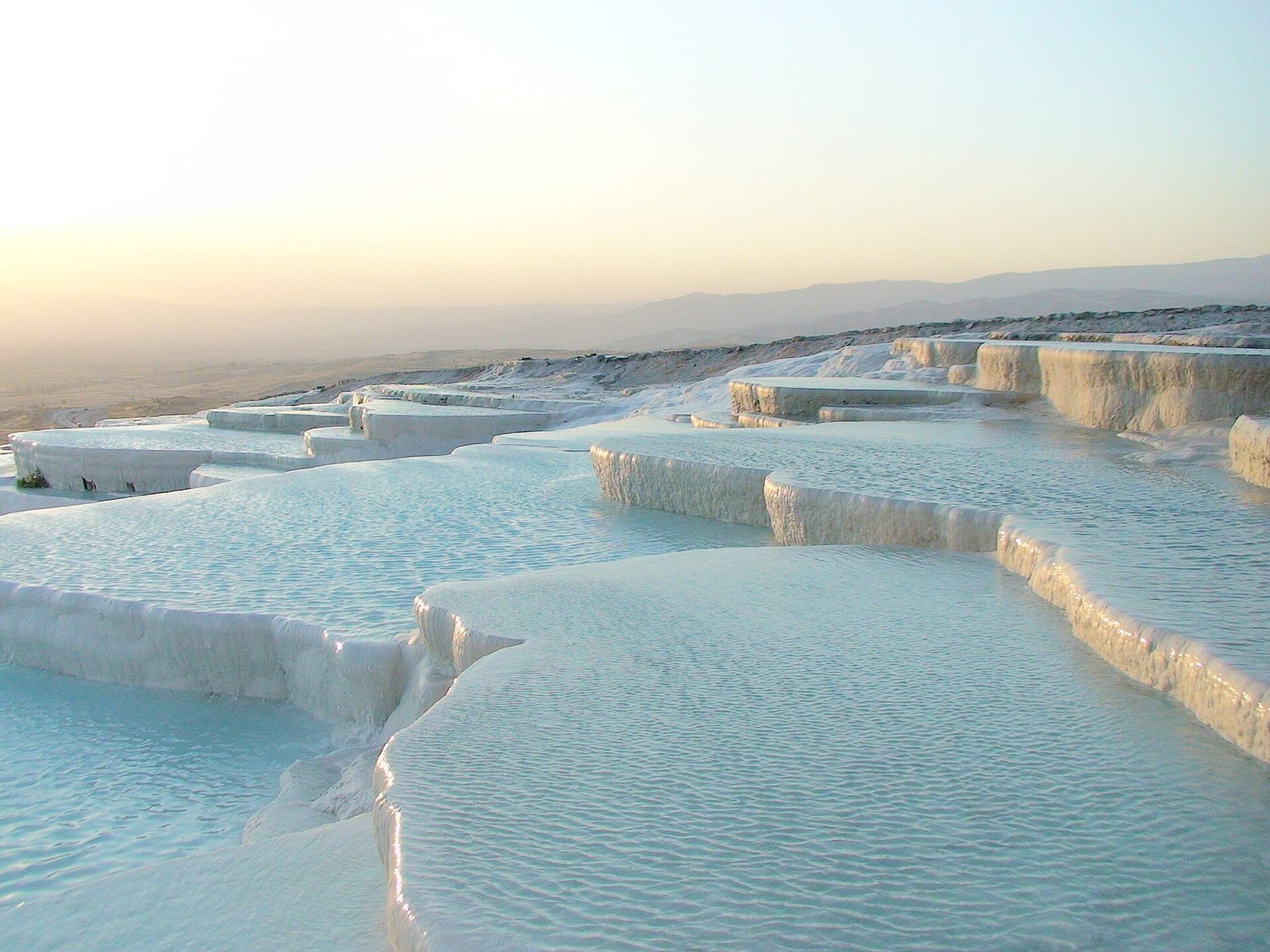
The travertines are formed by warm, mineral-rich spring water that has left layer after layer of white calcium carbonate down the hillside. The result looks like snow or frozen waterfalls, with shallow pools that mirror the sky. Pamukkale means “cotton castle” in Turkish, which describes it well.
For photos, the white surface acts like a giant reflector, so skin looks bright and even when the sun is low. The pools add colour and reflections, and the wide valley below gives a clean horizon. A few minutes’ walk away, Hierapolis offers a completely different mood: a large Roman theatre, colonnaded streets, gates and a vast necropolis with stone tombs.
Rules on the travertines: what to know first
Pamukkale is protected, and the rules exist because footprints, shoes and sun cream damage the surface. Rules can change, so always check the current ones on site, but these are the basics most visitors meet:
- Barefoot only. Shoes, including sandals and water shoes, come off before you step onto the travertine path. Bring a bag to carry them.
- Stay on the permitted route. Visitors walk along a designated path with pools beside it. Most of the terrace field, including the famous upper rims seen in aerial photos, is closed to walking.
- No climbing into closed pools or over barriers, however tempting the shot looks. Guards watch the area.
- The Antique Pool is separate. The warm pool with submerged Roman columns at the top of the site has its own entrance rules and charge, so check whether it is open and whether photography is allowed.
- Drones need permission. Drone flights in Türkiye are regulated and archaeological sites have their own restrictions, so check current drone rules well in advance.
The travertine can be slippery in some places and rough in others. Walk slowly and avoid running or jumping for photos.
Best spots for a photoshoot
The travertine path and pools
The main path running down the terraces has shallow pools on both sides, and this is where most portraits happen. Sitting on the edge of a pool, standing ankle-deep in the water or walking hand in hand along the white surface are classic frames. A longer lens helps blur other visitors in the background.
The upper edge at sunset
From the top of the terraces you look out over the valley and the village of Pamukkale. As the sun goes down, the white rock turns pink and orange, and this is the moment most photographers wait for.
Hierapolis theatre
The Roman theatre on the hillside above the site is one of the best preserved in the region, with a view across the valley. Its stone rows make a strong, graphic setting for couples.
Colonnaded streets and the necropolis
The ancient main street, the monumental gates and the sprawling cemetery of carved tombs give a quieter, more atmospheric set. Treat the necropolis with respect, since it is a burial ground, and keep poses calm and simple there.
Best light, heat and season
Light at Pamukkale is all about the sun’s angle. Midday sun on white rock is harsh, causes squinting and burns out details. The two good windows are:
- Early morning, right after opening, when the site is at its quietest and the air is cool.
- Late afternoon to sunset, when light is warm and the terraces glow. This is busier, but the colour is worth it.
Summer in the Denizli region is very hot, and the white surface reflects heat and light back at you. In July and August, only plan for early mornings or the last hours of the day, drink plenty of water and wear sunglasses between frames. Spring and autumn are the most comfortable seasons for a shoot. Winter can be cold underfoot on the wet rock, but the site is calmer.
Water levels in the pools also vary, since the flow of spring water across the terraces is managed. Some pools may be dry on the day you visit, so keep your plan flexible.
Crowds and how to plan the day
Pamukkale is a major stop for day tours, so mid-morning to mid-afternoon is usually the busiest time. Staying overnight in Pamukkale village or Denizli lets you be there at opening and again at sunset, avoiding the coach groups in between.
- Check current opening times and ticket rules before you go. A single entry ticket normally covers the travertines and Hierapolis, with the Antique Pool extra.
- Decide which entrance you will use. There are entrances at the lower end near the village and at the top near Hierapolis.
- Agree a meeting point with your photographer outside the ticket area.
- Allow two to three hours if you want both the terraces and the ruins.
What to wear and bring
Because you are barefoot and close to water, practical choices matter.
- Light, flowing clothes in colour look excellent against white. Deep blue, terracotta, red, emerald or mustard stand out, while pure white can disappear into the background.
- Hems you do not mind getting wet. Long dresses look lovely, but the bottom will touch the pools.
- A bag for shoes, a small towel for your feet and a hat for walking between frames.
- Go easy on sun cream on your feet and legs if you will stand in the pools, since oils and lotions leave marks on the white surface.
- Water and sunglasses, especially in the warmer months.
Pamukkale fits well into a wider trip through western Türkiye. Our Türkiye guide and Izmir page cover nearby options on the Aegean side.
Frequently Asked Questions
Can we walk anywhere on the white terraces?
No. Visitors stay on a designated barefoot route, and large areas of the terraces are closed to protect them. Barriers and guards make the limits clear.
Can we swim in the travertine pools?
The natural pools along the path are shallow and mostly for paddling. Swimming is possible in the separate Antique Pool when it is open, with its own charge and rules. Check current conditions on the day.
Is a drone allowed at Pamukkale?
Drones are regulated in Türkiye and protected archaeological sites usually need specific permission. Do not plan drone shots unless you have confirmed the current rules.
How far is Pamukkale from the coast?
It is inland, near the city of Denizli. Many visitors come from the Aegean or Mediterranean coast as a day trip or overnight stop, so consider staying nearby to shoot at the best times.
How can we find a photographer for Pamukkale?
Send your date and ideas through our request form. We will check whether a photographer we work with can cover Pamukkale on your date and put you in touch.
Cover photo: Pamukkale Hierapolis Travertine pools by Pvasiliadis, CC BY-SA 3.0, via Wikimedia Commons.
Photographers in Pamukkale
Planning a photoshoot in Pamukkale?
Tell us your date and the kind of shoot. We will check which photographers we work with there are available and reply by email, usually within two working days. Free, with no obligation.
Request a photographer