









Choosing a lens is often more important than choosing a camera body. The lens decides how much of the scene you capture, how the background looks and how well you can work in low light. Below is a list of well-regarded Canon lenses grouped by photography type, with a short explanation of why each group suits its subject.
All the lenses listed here are from Canon’s EF range, designed for Canon EOS DSLR cameras. They can also be used on Canon’s EOS R mirrorless cameras with Canon’s EF-EOS R mount adapter.
Portrait Photography
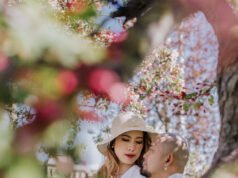
Portrait lenses are short telephotos with wide apertures. They give a flattering perspective, separate the subject from the background and produce soft, blurred backgrounds.
- Canon EF 50mm f/1.2L USM
- Canon EF 85mm f/1.2L II USM
- Canon EF 135mm f/2L USM
- Canon EF 70-200mm f/2.8L IS II USM
Landscape Photography
Landscape photographers usually work on a tripod at middle apertures, so a very wide maximum aperture is less important than sharpness across the frame, low weight and the ability to take filters. Wide-angle zooms cover big views, while a telephoto zoom picks out distant details.
- Canon EF 16-35mm f/4L IS USM
- Canon EF 17-40mm f/4L USM
- Canon EF 24-105mm f/4L IS II USM
- Canon EF 70-200mm f/4L IS II USM
Wildlife Photography
Wildlife calls for long focal lengths, fast autofocus and image stabilisation. The big prime lenses offer the best image quality and low-light ability, at a high price and weight. The 100-400mm zoom is a far lighter and more flexible alternative.
- Canon EF 400mm f/2.8L IS II USM
- Canon EF 500mm f/4L IS II USM
- Canon EF 600mm f/4L IS II USM
- Canon EF 100-400mm f/4.5-5.6L IS II USM
Sports Photography
Sports photographers need to freeze action, often in poor light and from a distance. Wide apertures allow fast shutter speeds, and quick, accurate autofocus is essential.
- Canon EF 70-200mm f/2.8L IS II USM
- Canon EF 100-400mm f/4.5-5.6L IS II USM
- Canon EF 400mm f/2.8L IS II USM
- Canon EF 600mm f/4L IS II USM
Macro Photography
True macro lenses focus close enough to reproduce a subject at life size on the sensor. A longer focal length gives more working distance, which helps with insects. The MP-E 65mm is a specialist manual-focus lens that goes from life size up to five times magnification.
- Canon EF 100mm f/2.8L Macro IS USM
- Canon EF 180mm f/3.5L Macro USM
- Canon MP-E 65mm f/2.8 1-5x Macro Photo
Wedding Photography
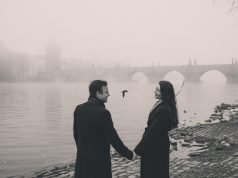
A wedding combines portraits, documentary moments, details and group photos, often in dark churches and reception rooms. Most wedding photographers rely on a fast standard zoom and a fast telephoto zoom, with one or two wide-aperture primes for portraits and low light.
- Canon EF 24-70mm f/2.8L II USM
- Canon EF 50mm f/1.2L USM
- Canon EF 85mm f/1.2L II USM
- Canon EF 70-200mm f/2.8L IS II USM
Street Photography
For street photography, small and discreet lenses with a natural field of view work best. The 35mm and 50mm focal lengths are the classics, and the 40mm pancake lens is particularly compact and light.
- Canon EF 35mm f/1.4L II USM
- Canon EF 50mm f/1.4 USM
- Canon EF 24-70mm f/2.8L II USM
- Canon EF 40mm f/2.8 STM
How to Choose the Right Lens
- Focal length: decide how wide or how close you need to be for your subject.
- Maximum aperture: wider apertures help in low light and blur backgrounds, but add cost and weight.
- Image stabilisation: lenses marked IS help with hand-held shooting at slower shutter speeds.
- Weight and size: a lens you are happy to carry all day is worth more than one that stays at home.
- Sensor size: on Canon’s APS-C cameras the field of view is narrower, so a 50mm lens behaves like a short telephoto.
- Try before you buy: renting a lens for a weekend is a good way to find out whether it suits you.
These lenses are just a few examples of Canon lenses that can be used for specific photography types. Notice that several of them, such as the 70-200mm f/2.8 and the 24-70mm f/2.8, appear in more than one list; a versatile lens can cover many kinds of work. Choosing the right lens for the job is one of the surest ways to capture the best possible shots.