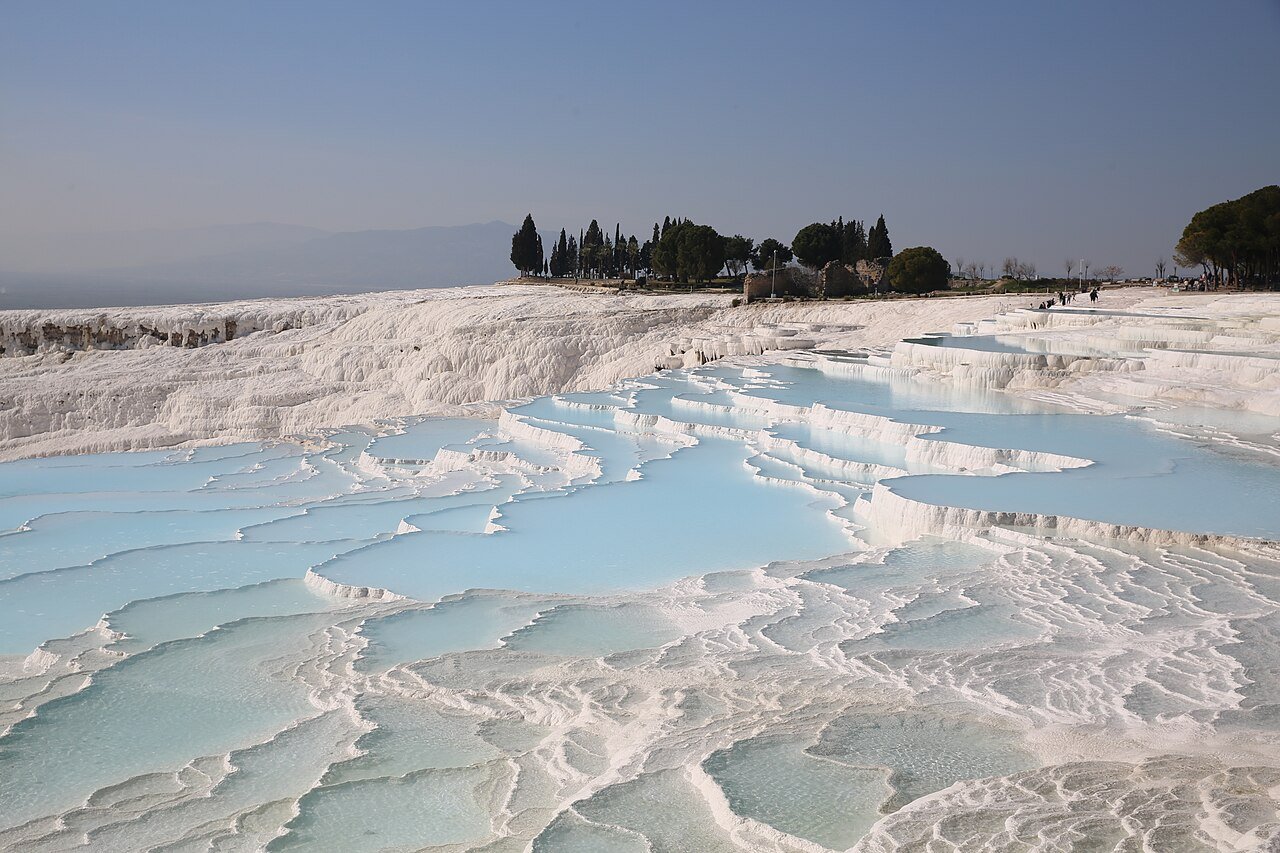
Pamukkale, the “cotton castle”, is a hillside of white travertine terraces formed by mineral-rich thermal water, with the ruins of the ancient city of Hierapolis on the plateau above. Together they form a UNESCO World Heritage Site and one of the most photographed landscapes in Türkiye. It is also a tightly managed, ticketed site, and a photoshoot here goes much better if you understand the rules and the light beforehand.
The main photo areas
The travertine path
Visitors may walk on a designated section of the terraces, and only barefoot, to protect the stone. Shallow pools of pale blue water sit against bright white rock, with the plain stretching away below. Water is channelled to different sections at different times, so some terraces may be dry on the day you visit. A local photographer will know which parts currently hold water.
Hierapolis
Above the terraces, the ancient city offers a very different setting: a large, well-preserved Roman theatre, colonnaded streets, monumental gates and an extensive necropolis. The honey-coloured stone and dry grass look best in low, warm light, and the ruins are usually much quieter than the terraces.
The antique pool
The thermal pool, where swimmers float above fallen ancient columns, is a separate paid attraction within the site. It is busy and steamy, and better for casual holiday pictures than for a planned portrait session.
The lake in Pamukkale village
At the foot of the slope, a small public park with a lake looks straight up at the white hillside. It is outside the ticketed zone, which makes it a convenient place for wide shots with the travertines as a backdrop.
Light and timing
The white surface reflects an enormous amount of light. In the middle of the day it is dazzling, faces squint, and cameras struggle with contrast. The terraces look out to the west over the plain, so late afternoon and sunset are the classic hours: the pools take on the colours of the sky and the stone turns from white to gold and pink. This is also when the site is most crowded.
Early morning is the alternative. Arriving when the gates open gives you cooler air, softer light and far fewer people. Hot-air balloons and paragliders often fly over Pamukkale around sunrise in suitable weather, which can add interest to the sky. Check current opening hours before you plan, as they change with the season.
Summer is very hot on the exposed slope. Spring and autumn are more comfortable, and winter can be surprisingly pleasant because the thermal water is warm underfoot, though the air is cold and the days short.
Rules and practicalities
- Shoes must come off on the travertines. Carry a bag for them, and expect rough or slippery patches.
- Wet stone is slick. Move slowly, especially in a long dress.
- Stay within the permitted areas. Closed-off terraces are protected, and guards do enforce this.
- Pamukkale and Hierapolis are a ticketed archaeological site. Professional and commercial shoots, including wedding-dress sessions, generally require permission, and drone flights need registration and separate authorisation. Ask your photographer to confirm what is needed for your type of shoot.
- The site has several entrances. Agree in advance which gate you will meet at, since they are far apart.
- Sunglasses, water and sun protection are essential in the warmer months.
Sessions that suit Pamukkale
Couple, honeymoon and solo travel portraits are the most common. Flowing dresses in strong colours such as red, yellow or deep blue stand out against the white; white clothing tends to disappear into the background. Families with young children should keep sessions short because of the heat and the slippery ground.
How to choose and book a photographer
Look for photographers, often based in Pamukkale or nearby Denizli, who can show complete sessions from the site in conditions like yours. Check how they handle the bright stone: skin tones should look natural and the terraces should retain detail instead of burning out to blank white. Ask who arranges any permissions, whether entrance tickets are included, how many edited images you will get and when, and what the policy is for bad weather or changes of plan. Put the agreement in writing.
Browse our photographer directory to find photographers, and if you photograph in the Denizli area, add a free listing of your own. For further reading, see more Türkiye photography guides.
Cover photo: Pamukkale, Denizli 2026 68.jpg by Biologg, CC BY-SA 4.0, via Wikimedia Commons.
Photographers in Türkiye
Planning a photoshoot in Türkiye?
Tell us your date and the kind of shoot. We will check which photographers we work with there are available and reply by email, usually within two working days. Free, with no obligation.
Request a photographer