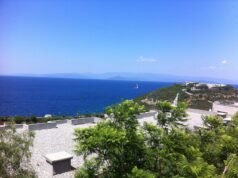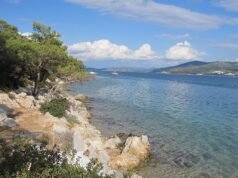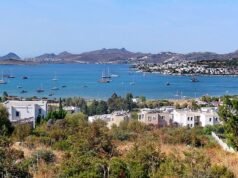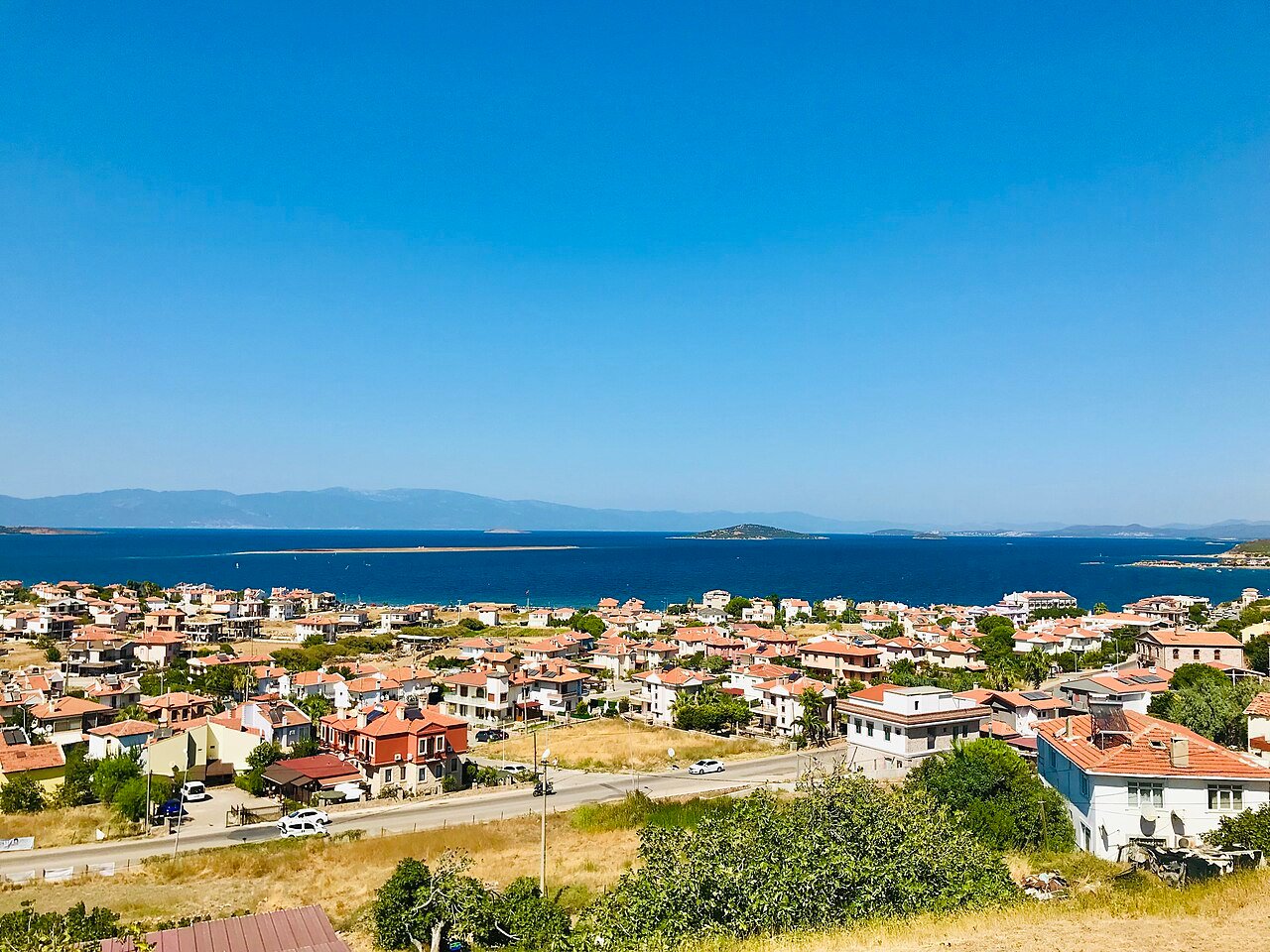
Cunda, officially Alibey Island, lies just off Ayvalık on the northern Aegean coast and is joined to the mainland by a causeway. It is small enough to cross on foot, and its character comes from the old Greek stone houses, painted shutters, bougainvillea and a harbour lined with fish restaurants. For photography, that means a compact, walkable location with a consistent look, well suited to relaxed couple and family sessions.
Photo ideas around the island
The back streets
Behind the waterfront, narrow lanes climb the hill between two-storey stone houses with wooden doors and iron balconies. Colours are warm and muted: ochre, faded blue, weathered stone. These streets are best for walking portraits, doorway frames and candid shots with cats, bicycles and cafe tables in the background. Many houses are private homes, so pose beside them, not on their steps.
Taksiyarhis Church
The large nineteenth-century Greek Orthodox church in the middle of the old town has been restored and now operates as a museum. Its pale neoclassical exterior anchors many wide shots of the village. Because it is a museum, professional shoots inside would need permission from the management; most sessions simply use the exterior and the surrounding streets.
The windmill hill
At the top of the town, a restored windmill and small chapel now house a library. The terrace beside them gives a view over tiled roofs, the harbour and the scattered islands of the bay. It is a short but steep walk and the obvious place to finish a session when the light is low.
The waterfront
Fishing boats, nets and the long row of restaurant tables give the harbour an everyday liveliness. Early morning, when boats come in and the promenade is empty, is far better for photos than the busy dinner hours.
Outside the village
Much of the rest of the island is olive groves, quiet coves and protected natural land within the Ayvalık Islands Nature Park. An olive grove at golden hour is a simple, flattering setting for family photos. On the mainland side, the Şeytan Sofrası viewpoint is the area’s best-known place to watch the sun set over the archipelago, though it is crowded at that hour in summer.
Best time of year and day
July and August bring heat, strong light and a great many visitors, especially at weekends, when the causeway road and parking fill up. Late spring and early autumn are kinder: the sea is still blue, the streets are calmer and the light is softer. Winters on the north Aegean are cool, windy and wet, but the village keeps its charm and you will have the lanes almost to yourself.
Because the lanes are narrow, parts of them stay in shade most of the day, which helps at midday. For the hilltop and the shore, plan for the first hours after sunrise or the last before sunset. Wind is common, so think about hair and loose fabrics.
What to wear and bring
- Natural fabrics and soft colours such as white, cream, terracotta and sea blue sit comfortably against the stone.
- Streets are cobbled and uneven. Flat sandals or trainers are the practical choice.
- Leave the car at the edge of the village; vehicles in the lanes spoil both the walk and the photos.
- If you want aerial images of the island, remember that drone flights require registration and permission.
Finding and booking a photographer
Photographers who cover Cunda are often based in Ayvalık or elsewhere in the region, and some travel from İzmir or Istanbul for weddings. Ask whether travel and accommodation costs apply. When you review portfolios, look for whole sessions shot on the island or in similar Aegean towns, so you can judge consistency and not just one lucky frame. Agree the duration, the number of edited images, the delivery date and the payment and cancellation terms in writing, and decide together on a fallback if strong wind or rain arrives.
You can search for photographers in our photographer directory, where local photographers are also invited to add a free listing. For more destinations along the coast and inland, see more Türkiye photography guides.
Cover photo: Namık Kemal, Cunda Island.jpg by Maurice Flesier, CC BY-SA 4.0, via Wikimedia Commons.
Photographers in Türkiye
Planning a photoshoot in Türkiye?
Tell us your date and the kind of shoot. We will check which photographers we work with there are available and reply by email, usually within two working days. Free, with no obligation.
Request a photographer