Kampa is the island that lies under the Malá Strana end of Charles Bridge, between the Vltava and its narrow side branch, the Čertovka. It is only a few steps from the busiest tourist route in Prague, yet it feels like a small town of its own: a cobbled square, a row of old houses, a mill wheel turning in the canal and a long riverside park. It is also one of the places I use most often for photo sessions, because within a few hundred metres it offers almost every kind of Prague background.
A Little History
The Čertovka, or Devil’s Stream, is an artificial channel dug in the Middle Ages to drive water mills, and it is this channel that makes Kampa an island. For centuries the island was mostly gardens and mills. Houses were built at the northern end, around today’s Na Kampě square, where pottery markets used to be held, while the southern part remained gardens that were later joined into the public park. Being so low, Kampa has always been exposed to floods, and it was badly hit in 2002; you can still find high-water marks on some of the buildings.
The Stairs from Charles Bridge
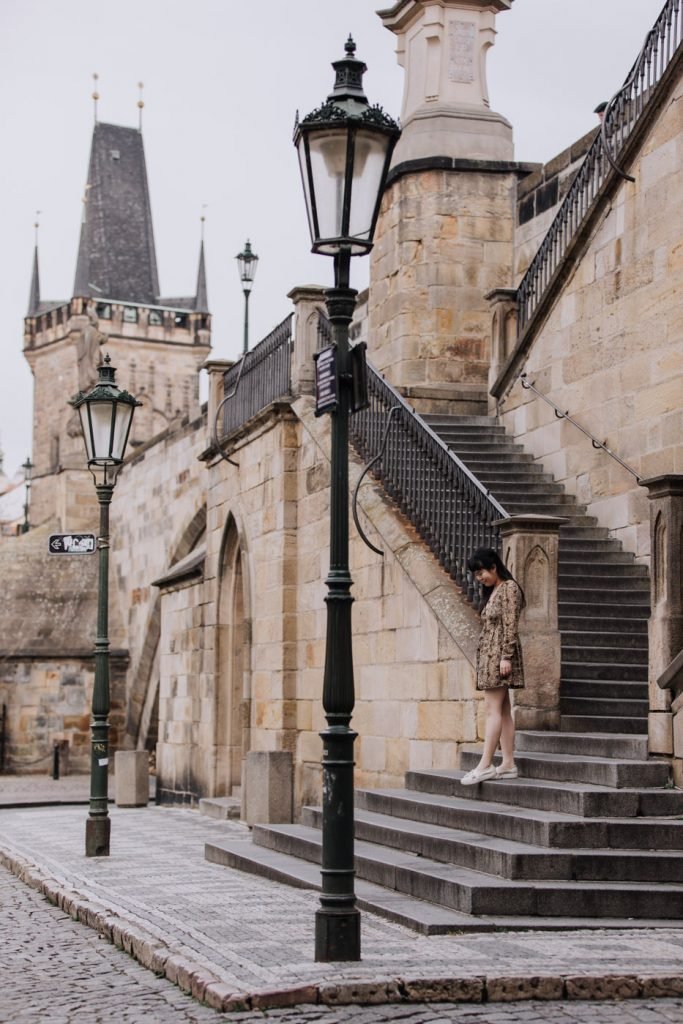
The most direct way onto the island is the double staircase that leads straight down from Charles Bridge to Na Kampě square. It is one of the most picturesque spots in Prague: beautiful symmetry, old lamps, and the bridge and its towers right above you.


Kampa Island Viewpoints


Liechtenstein Palace on Kampa
The Lichtenštejnský palác on the riverbank is one of two palaces in Prague that formerly belonged to the princely family of Liechtenstein. It should not be confused with the better-known Liechtenstein Palace on Malostranské náměstí, which houses the music faculty and is used as a concert venue. The Kampa palace is used for official purposes and is not normally open to visitors, but its facade is a fine sight from the river side.

Kampa Park
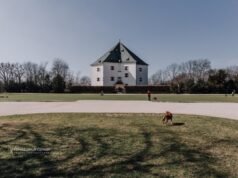
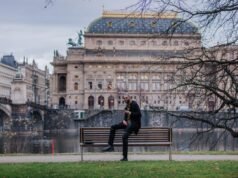
The southern half of the island is a park with large lawns and old trees. The grassy areas are widely used for picnics and relaxing, and you will see many locals here with their dogs running around or playing. From the riverbank there is an open view across the Vltava to the Old Town, the National Theatre and the weir.

Museum Kampa
One of Prague’s most distinctive museums, Museum Kampa is dedicated to modern Central European art and occupies the former Sova’s Mills on the riverbank. It holds an important collection of works by František Kupka and by Otto Gutfreund, one of the country’s most renowned sculptors. Around the building you will find outdoor sculptures as well, including David Černý’s giant crawling babies in the park and an oversized chair standing in the river. For exhibitions and opening times, check the museum’s official website.
The Yellow Penguins
Next to the museum, a line of yellow penguins stands on a metal beam above the Vltava. They are the work of the Cracking Art Group, are made of recycled plastic, and light up at night. They appeared here in the later 2010s and have become one of the most photographed details on the island.
The Čertovka and Prague’s “Little Venice”
The canal that runs under Charles Bridge and through Kampa is the Čertovka. The houses, many of them former mills, stand directly in the water, which is why this corner is called Little Venice. You cannot walk alongside most of the canal, but small boat tours go into it, and there are several bridges from which you can look along it. From the little bridge near Velkopřevorské náměstí you can see the big wooden wheel of the former Grand Priory Mill, which dates back to the 15th century.

How to Get to Kampa
Walk down the stairs from Charles Bridge, or come from the south through the park from the Újezd tram stop. The Hellichova and Malostranské náměstí tram stops are also only a few minutes away. The island is public space, free and open at all times.
Photographing Kampa Island
Charles Bridge arches. From the northern tip of the park and the riverbank you can photograph the stone arches of Charles Bridge from below, with the Old Town Bridge Tower at the far end. This low side view is one of my favourites, and far less common than pictures taken on the bridge itself.

Light. The riverbank faces east, so sunrise is the best time: the sun comes up over the Old Town, the water is calm and often misty, and swans gather near the bank. In the evening the bank is in shade, but the Old Town across the river is lit warmly by the setting sun and the bridge lamps come on at blue hour. Inside the island, the narrow canal and the lanes are shaded for most of the day, which gives soft, even light for portraits even at noon.
Crowds. Compared with Charles Bridge above, Kampa is quiet. The stairs and the Little Venice bridge are busy from late morning, so photograph those first and leave the park for later. Very early in the morning you will meet almost nobody.
Seasons. In autumn the big trees in the park turn yellow and the paths are covered in leaves. In winter, fog on the river and the gas-style lamps give the most atmospheric pictures. Spring brings blossom along the Čertovka, and on summer evenings the lawns fill with people, which is good for relaxed, documentary-style photographs of local life.
Planning more stops in the city? Browse more Prague guides for other places worth visiting and photographing.
Proposing on Kampa Island
Kampa is one of the best places in central Prague to propose. It sits right under Charles Bridge, yet it feels like a small town of its own, with the bridge and the Old Town across the water.
- Is it a good place to propose? Yes. It offers the famous Charles Bridge backdrop in a much calmer setting, and very early in the morning you will meet almost nobody.
- Best time: sunrise, when the sun comes up over the Old Town, the water is calm and often misty, and swans gather near the bank. Blue hour is lovely too, as the bridge lamps come on.
- Permits and rules: the island is public space, free and open at all times, so a private proposal needs no permit. Drones over central Prague are restricted.
- Crowds: quiet compared with the bridge. The stairs and the Little Venice bridge get busy from late morning, and the lawns fill on summer evenings.
- The best spot: the northern tip of the park on the riverbank, under the stone arches of Charles Bridge with the Old Town Bridge Tower beyond.
- Where the photographer can wait: further along the riverbank or near the old trees of the park, looking back towards the bridge.
Proposal & couple photography in Prague
Planning a proposal or photoshoot in Prague?
CandidYES photographs surprise proposals, engagements and couple sessions in Prague. Send your date and idea, and you will hear back within 24 hours with availability and a location suggestion.
Check availabilitySee Prague locations ›