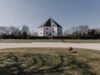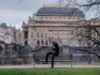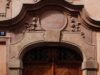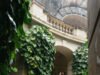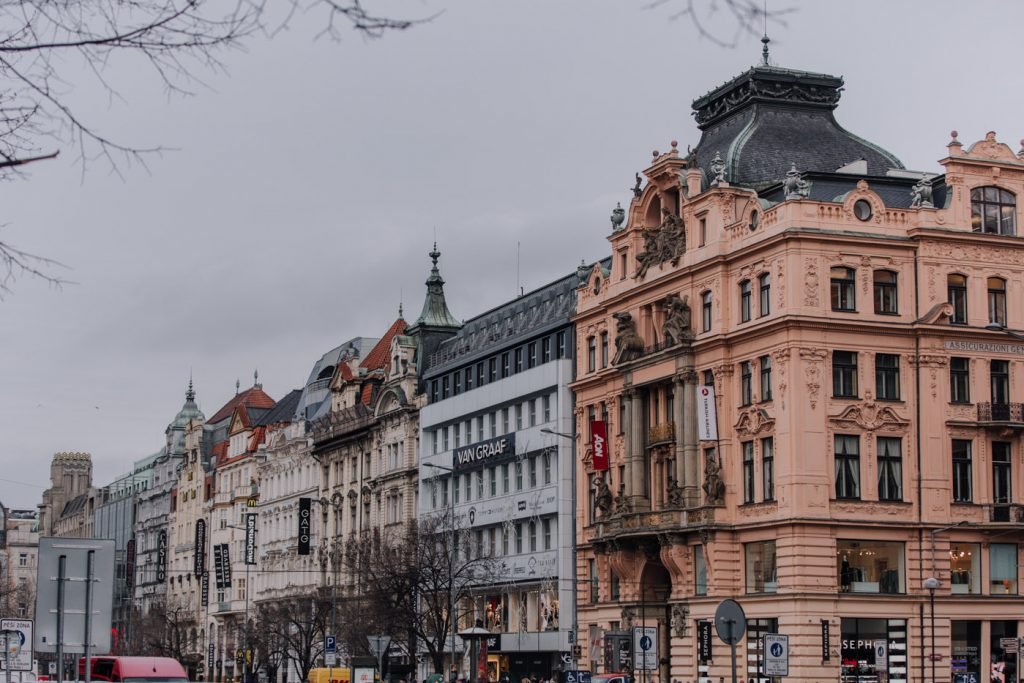
Wenceslas Square, Václavské náměstí, is less a square than a long, wide boulevard that climbs gently through the New Town of Prague. It is the commercial centre of the city, lined with hotels, shops, arcades and offices, and it is also the place where Czechs have gathered at almost every turning point of their modern history. If Old Town Square is the heart of medieval Prague, this is the heart of the modern city.
From Horse Market to National Stage
The square was laid out in 1348, when Charles IV founded the New Town. It was planned as a marketplace and for centuries was known as the Horse Market. It received its present name in 1848, in honour of St. Wenceslas, the patron saint of Bohemia. It is about 750 metres long, with the National Museum closing the view at the upper end.
The twentieth century turned it into a political stage. Crowds gathered here when Czechoslovak independence was declared in 1918, during the Soviet-led invasion of 1968, and again in November 1989, when hundreds of thousands of people filled the square during the Velvet Revolution.
The Statue of St. Wenceslas
At the top of the square, below the National Museum, the statue of St. Wenceslas on his horse cuts a striking figure. This is King Wenceslas (Svatý Václav) himself, the duke murdered about a thousand years ago by his brother and the patron saint of the Czech lands. The monument is the work of the sculptor Josef Václav Myslbek and was unveiled in the early twentieth century; the saint is surrounded by four other Czech patron saints.
“By the horse”, or in Czech “pod koněm”, is a popular place for Czechs and tourists alike to arrange to meet each other. If a local tells you to meet under the tail, this is where they mean.
The Memorial to Jan Palach and Jan Zajíc
Near the statue, set into the ground, are memorials that commemorate those who died during the communist era. The best known is dedicated to Jan Palach, the student who set himself on fire in January 1969 in protest at the Soviet invasion and the resignation that followed it. A second student, Jan Zajíc, followed his example a month later. In front of the National Museum, a bronze cross rising out of the paving marks the place.
What Else to See
- The National Museum – the monumental Neo-Renaissance building at the top of the square, with a second, modern building next to it. Just off to the left is the Prague State Opera.
- Grand Hotel Europa – one of the most beautiful Art Nouveau facades in Prague, about halfway down the square.
- Lucerna Palace – a passage complex between Vodičkova and Štěpánská streets, where David Černý’s upside-down horse parodies the statue outside.
- The arcades – many buildings hide covered passages with cafés, cinemas and shops; they are a Prague speciality and a good refuge in bad weather.
- The architecture – look above the shop signs. The facades run from Neo-Renaissance through Art Nouveau to interwar Functionalism.

How to Get There
Two metro stations serve the square: Muzeum (lines A and C) at the top by the National Museum, and Můstek (lines A and B) at the bottom, where the square meets the edge of the Old Town. Trams cross it in the middle at the Václavské náměstí stop. The square has been undergoing a long, phased renovation, so expect some building work and changed layouts in places.
Map Location
Photographing Wenceslas Square
The classic view is from the lower end looking uphill, with the whole length of the square leading to the statue and the dome of the National Museum. A telephoto lens compresses the distance and makes the museum sit large above the traffic and the crowds. The opposite view, from the museum ramp and steps looking down the square, is just as good and shows the statue from behind against the long line of buildings.
Light. The square runs roughly from northwest up to southeast. In the morning the sun is behind the museum, so the building is in shade when seen from below; later in the day the light swings round and falls on the museum facade, which is why late afternoon and early evening usually give the best results for the uphill view. At blue hour the museum is floodlit and the shop lights and passing trams add colour and movement, so it is worth staying after sunset with a tripod or a steady hand.
Details. Do not only shoot the wide view. The Art Nouveau ornament of the Grand Hotel Europa, the sculptures on the upper floors and the interiors of the arcades are all rewarding subjects, and the passages give good light for portraits on rainy days.
Crowds and seasons. This is a working city street, busy from morning until late at night. Early on a weekend morning is the only quiet time. Around Christmas and Easter there are market stalls and decorations in the lower part. On anniversaries such as 17 November and in January, people leave candles and flowers at the Palach memorial and by the statue, which makes for quiet, meaningful pictures if you photograph with respect.
Planning more stops in the city? Browse more Prague guides for other places worth visiting and photographing.
Proposing on Wenceslas Square
Wenceslas Square is not a place I would recommend for a proposal. It is a working city boulevard with traffic, shops and crowds from morning until late at night, and the area by the statue holds memorials to Jan Palach and Jan Zajíc, which deserve quiet respect.
- Is it a good place to propose? Not really. It is hard to find a private moment here, and the space near the statue and the National Museum is a place of remembrance, so a proposal there would not be appropriate.
- Best time: if you still want the square in your photos, come early on a weekend morning, the only quiet time, and propose somewhere nearby instead.
- Permits and rules: it is a public street, so a private moment needs no permit. Expect building work from the long renovation, and stay well away from the memorials.
- Crowds: busy all day and late into the night, with markets in the lower part around Christmas and Easter.
- A quieter alternative: the Franciscan Garden, a small walled garden just off the lower end of the square, or Vyšehrad, a short metro ride away, with river and castle views.
- Where the photographer can wait: in the Franciscan Garden, on a bench along one of the paths, out of sight but in range.
Comparing places? See our guide to the best places to propose in Prague.
Proposal & couple photography in Prague
Planning a proposal or photoshoot in Prague?
CandidYES photographs surprise proposals, engagements and couple sessions in Prague. Send your date and idea, and you will hear back within 24 hours with availability and a location suggestion.
Check availabilitySee Prague locations ›