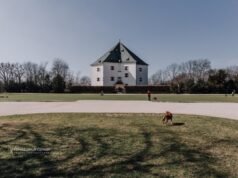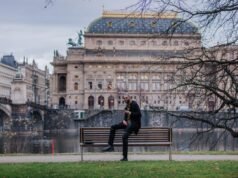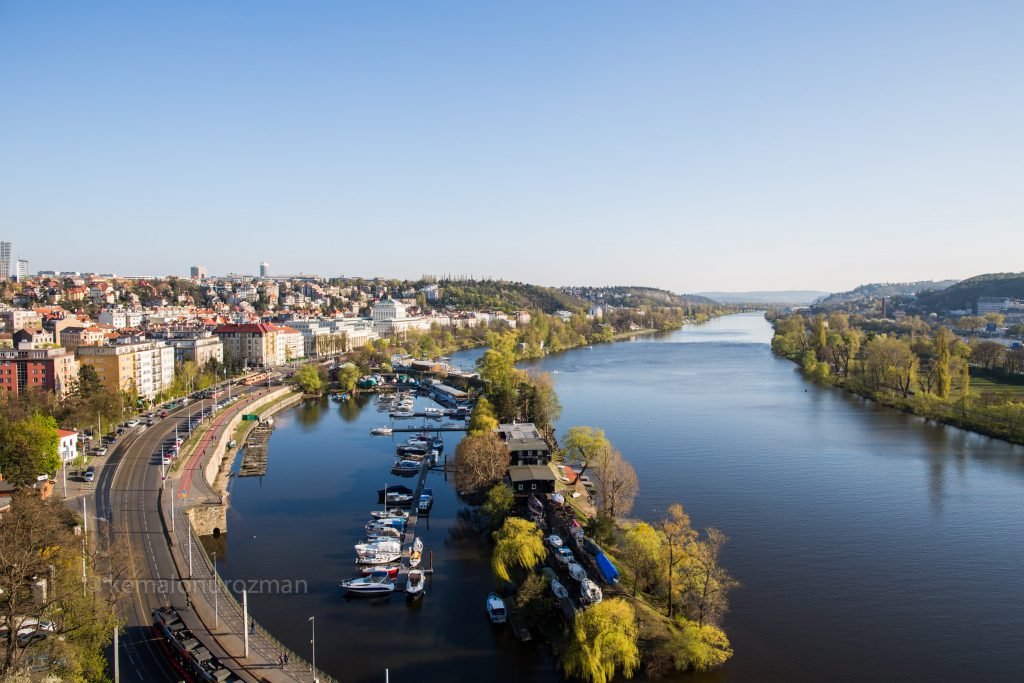
Vyšehrad is a historic fortress on a rock above the right bank of the Vltava, south of the city centre. Inside its brick ramparts you will find one of the best gardens and parks in Prague: an oasis of tranquillity with beautiful walks, romantic corners, vistas of the river and Prague Castle, and a reverent place of remembrance of great Czechs. It also has a children’s playground, several cafes and a restaurant. For a daily walk in green surroundings with a beautiful view of Prague, it is definitely a good place, and it is far calmer than the castle on the other side of the river.
A short history of Vyšehrad
Vyšehrad was founded in the 10th century and is wrapped in legend: according to old Czech tradition, this is where Princess Libuše foretold the glory of Prague. In the second half of the 11th century, Vratislav II, the first King of Bohemia, made it his seat for a time, and the Rotunda of St Martin survives from that era as one of the oldest buildings in the city. The site later lost its importance to Prague Castle, was damaged during the Hussite Wars and was rebuilt in the 17th century as a Baroque fortress; the massive brick walls and gates you see today date from that period.
In the 19th century Vyšehrad became a national symbol. The Basilica of St Peter and St Paul was given its neo-Gothic appearance with two tall spires, and the cemetery beside it was turned into a burial place for the country’s most important artists and scholars.
History of the gardens
In ancient times there were no trees at Vyšehrad itself; only the surrounding area was wooded. After the Hussite Wars, vineyards, gardens and fields were established here. The first reference to planted trees dates only from 1841, when an alley of locust trees was planted along the path that today connects the Vyšehrad gates. Most of the greenery was established during the 19th century and largely consists of two originally private parks, the Karlach Gardens and the Štulc Gardens, two private gardens, the New Provost’s Garden and the New Deanery Garden, and then the park under the ramparts and the Vyšehrad cemetery.
Photos from Vyšehrad


What to see
- The ramparts. You can walk almost the whole circuit of the walls. The western and northern sides look over the Vltava, the bridges and Prague Castle in the distance; the southern side looks upriver towards Podolí.
- Basilica of St Peter and St Paul. The twin spires are visible from much of Prague, and the interior is richly painted in Art Nouveau style.
- Vyšehrad Cemetery and Slavín. The composers Antonín Dvořák and Bedřich Smetana, the painter Alfons Mucha and many other well-known Czechs are buried here.
- Rotunda of St Martin. A small Romanesque rotunda from the 11th century, near the Leopold Gate.
- The statues in the park. Four large sculptural groups by Josef Václav Myslbek, showing figures from Czech legends, stand on the lawn next to the basilica. They were moved here from Palacký Bridge.
- The gates. The Tábor Gate, the Leopold Gate and the Brick Gate mark the old entrances to the fortress.
After the visit you can also stop at U Kroka, a traditional Czech restaurant just below the fortress. It is a place I like to recommend after a walk here, and it is popular, so a reservation is a good idea.
How to get there
The easiest route is metro line C to Vyšehrad station. From there it is a level walk of about ten minutes past the Congress Centre to the Tábor Gate. Coming from the river, trams stop at Výtoň, from where a steep path and steps lead up to the ramparts. The grounds are open and free to walk through; the basilica, the casemates and the exhibitions have their own opening times and admission, so check the official Vyšehrad website for current details.
Photographing Vyšehrad
Best light and time of day
The view from the western ramparts faces the river and the castle, so it is at its best in the late afternoon and at sunset, when the sun goes down behind the hills on the far bank and the river turns gold. Morning light is good for the basilica facade, the cemetery arcades and the gardens, and the park is very quiet before nine.
Viewpoints
The corner of the ramparts above the river gives the widest panorama, with the railway bridge below and Prague Castle on the horizon. A longer lens helps to bring the castle closer. For the basilica, step back onto the lawn by the Myslbek statues to fit both spires in the frame, or use the alley of trees leading to the main door as a frame.
Photoshoots
Vyšehrad is one of my favourite locations for couple, family and pre-wedding sessions. There is a lot of variety in a small area: brick walls and gates, tree-lined paths, open lawns, the church doors and the city view. There is space to work without a crowd behind you, which is rare in central Prague. The cemetery is a place of remembrance and is not suitable for a photoshoot.
Crowds and seasons
Even in high season Vyšehrad is much less crowded than the Old Town or the castle, though sunny weekend afternoons bring many local families. Autumn is the most photogenic season, with yellow leaves along the ramparts and low warm light. Spring brings blossom and fresh green, summer evenings are long and soft, and in winter the bare trees open the views and a little snow on the brick walls looks wonderful.
Looking for other places to visit and photograph? Browse more Prague guides on this site.
Proposing at Vyšehrad
Vyšehrad is one of my favourite places in Prague for a proposal. The ramparts look over the Vltava to Prague Castle, the paths are green and romantic, and even in high season it is far calmer than the castle or the Old Town.
- Is it a good place to propose? Yes, very much so. The one exception is Vyšehrad Cemetery and Slavín: they are a place of remembrance, and a proposal there would not be appropriate. Keep to the ramparts and the gardens.
- Best time: late afternoon and sunset, when the sun goes down behind the hills on the far bank and the river turns gold. Early morning is very quiet too.
- Permits and rules: the grounds are open and free to walk through, and a private proposal in the park normally needs no permit. The basilica has its own rules. Drones over central Prague are restricted.
- Crowds: light for most of the week. Sunny weekend afternoons bring many local families.
- The best spot: the corner of the western ramparts above the river, with the railway bridge below and Prague Castle on the horizon.
- Where the photographer can wait: further along the ramparts with a longer lens, which brings the castle closer behind you.
Comparing places? See our guide to the best places to propose in Prague.
Proposal & couple photography in Prague
Planning a proposal or photoshoot in Prague?
CandidYES photographs surprise proposals, engagements and couple sessions in Prague. Send your date and idea, and you will hear back within 24 hours with availability and a location suggestion.
Check availabilitySee Prague locations ›